The Morning the Horses Came Down to the Valley
A dawn on the Hustai steppe, waiting above a stream before 8 AM as a harem of wild takhi picked its way down to drink. Why first light works, and how I set guests up for it.
 By Bat-Erdene Ganbaatar, Hustai National Park tour guide and wildlife specialist
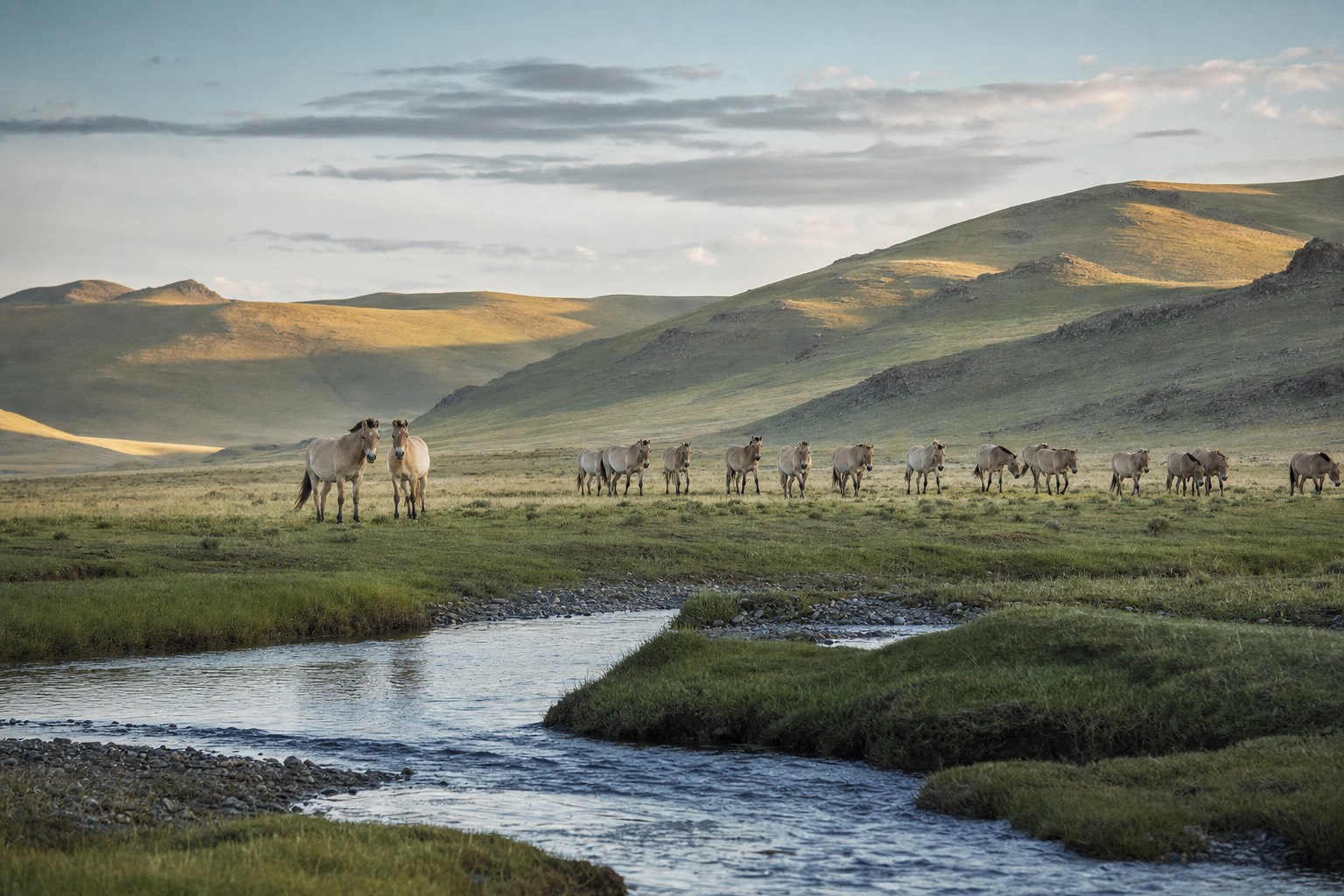
TL;DR: The wild horses of Hustai drift down to valley streams around first light and again near dusk, when the air is cool and quiet. Get above a valley before 8 AM, keep 200 to 300 metres between you and the band, stay still, and let them come to the water. Midday is the slow shift. Dawn is the one worth losing sleep over.
Discover Hustai on a private 8 to 10 hour wildlife visit with Ulaanbaatar pickup, park admission, lunch and transport arranged, leaving you free to concentrate on the steppe and its animals. Explore the private Hustai wildlife visit
Booking Choice: Turn the article's fieldcraft into a full day at Hustai with private transport, lunch and admission handled. Wildlife and dawn are never guaranteed, but the visit is directly focused on exploring the park. See the private Hustai itinerary
The valley was still grey when we cut the engine. No wind yet, just the tick of cooling metal and a marmot somewhere below us clearing its throat. I have done this walk-up more mornings than I can count since 2022, and it never quite settles into routine. Down by the stream the grass was silver with dew. Then a shape moved on the far slope, then two, then a whole line of them, heads low, coming down the way they always come down: unhurried, in single file, the foals bunched near the middle.
That is the thing nobody tells you before a first visit. The takhi are not waiting for you at the gate. You go to where the water is, early, and you wait for the land to hand them to you.
When do the wild horses come down to the valleys?
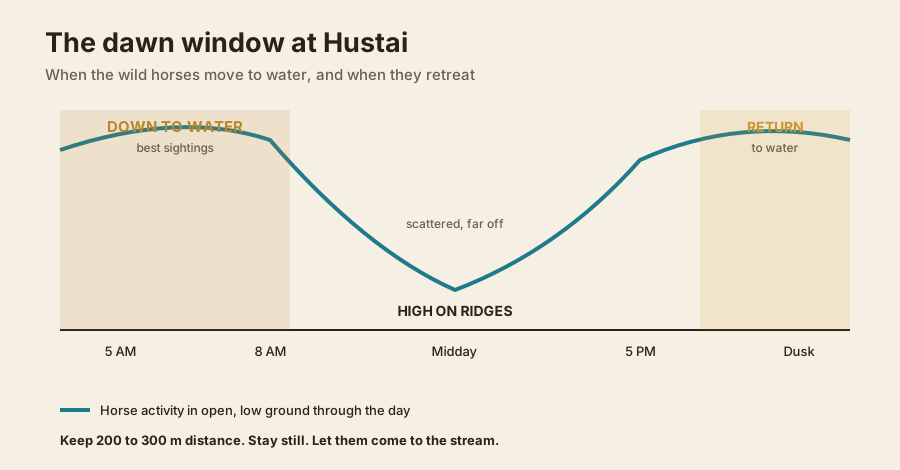
Around dawn and again near dusk. In the cool hours the harems leave the higher, drier slopes where they graze overnight and pick their way down to valley streams and seeps to drink. On a summer morning that pull to water is strongest before roughly 8 AM, which is why an early start changes everything about your odds.
Hustai sits in dry hill country, and water is the fixed point everything else moves around. Through the hot middle of the day the horses tend to stand on breezy ridgelines, tails to the wind, keeping the flies off and the heat down. They are still there. They are just far, scattered and hard to read at a distance. Come back to the same valley at first light and the picture flips: the bands are lower, tighter, and busy with the one task that brings them into open view, which is getting to the stream.
The park's own guidance and long-running visitor accounts both put the reliable viewing at the cool ends of the day, and that lines up with everything I have watched from the ridge. If you can only pick one window, pick the morning. Light is kinder for photography, the air holds sound so you hear them before you see them, and you beat the day-trip minibuses that roll in later. The official Hustai National Park site frames the reserve around exactly this rhythm of grazing high and watering low.
| Time of day | Where the takhi tend to be | Your odds of a close, calm sighting |
|---|---|---|
| Before 8 AM (dawn) | Low, moving to valley streams to drink | Best. Tight bands, open ground, soft light |
| Mid-morning | Starting to drift back uphill | Fair, and fading as the sun climbs |
| Midday | High on breezy ridges, scattered | Poorest. Distant, hard to approach |
| Late afternoon | Beginning to ease back down | Improving again |
| Dusk | Returning to water | Very good, though the light goes fast |
This is judgement built from repeated mornings, not a timetable the horses signed. Weather bends it. A cool, overcast summer day can keep them low and active for longer, while fierce heat shortens the good window to almost nothing.
Why does dawn beat the middle of the day for seeing takhi?
Temperature and thirst do the work for you. At first light the horses are drawn to water and moving through open, low ground where you can actually see and approach them. By midday they retreat to high, windy slopes to escape heat and insects, so they end up far away, spread out, and much harder to reach on foot.
There is a second reason, and it is about you rather than them. At dawn the steppe is silent enough that you become part of it. Engines are off, voices drop, and the horses read a still, quiet ridge as no threat. Roll up at noon in the heat with three other vehicles and the same band will simply hold its distance. Nothing dramatic, no stampede, they just decline to close the gap.
Marmots factor in too, which sounds odd until your first morning. The tarbagan marmots wake early and whistle across the slopes, and that steady chatter is a good sign the valley is settling into its dawn routine. When I am reading whether a spot will deliver, I listen for them as much as I look for horses. If you want the fuller picture of what shares this steppe, I go through it in the guide to the animals of Hustai, because the takhi are the headline act but rarely the only thing moving at first light.
Autumn and spring stretch the good hours because the whole day runs cooler. For the month-by-month version of this, the best time to visit Hustai guide breaks down how the seasons shift both the viewing and the comfort of standing still outdoors at dawn.
How close can you actually get to a wild harem?
Not as close as your phone camera wants you to be. The working distance at Hustai is 200 to 300 metres, kept for the horses' sake and yours. You stay on tracks, you do not feed or chase, and a park guide rides along on wildlife drives in the protected zone. Bring optics, because the good sightings are earned at range.
I position guests uphill and downwind of a valley before the band arrives, then we go quiet and let them close the distance on their own terms. Sometimes they water two hundred metres out and never come nearer. Sometimes a curious yearling drifts up the slope and the whole group follows, and you get a stretch of minutes at closer range that you did not engineer. The rule is simple: the horses set the distance, never you.
This is also why the type of trip you pick matters more than people expect. A shared group departure usually leaves Ulaanbaatar around nine and reaches the park mid-morning, which is lovely but lands you after the best window has closed. If catching first light is essential, confirm the departure time directly before booking. The listed private Hustai wildlife visit does not guarantee dawn. I do not run that departure myself, so treat the listing as the source of truth on timings.
What does a harem look like when it comes to drink?
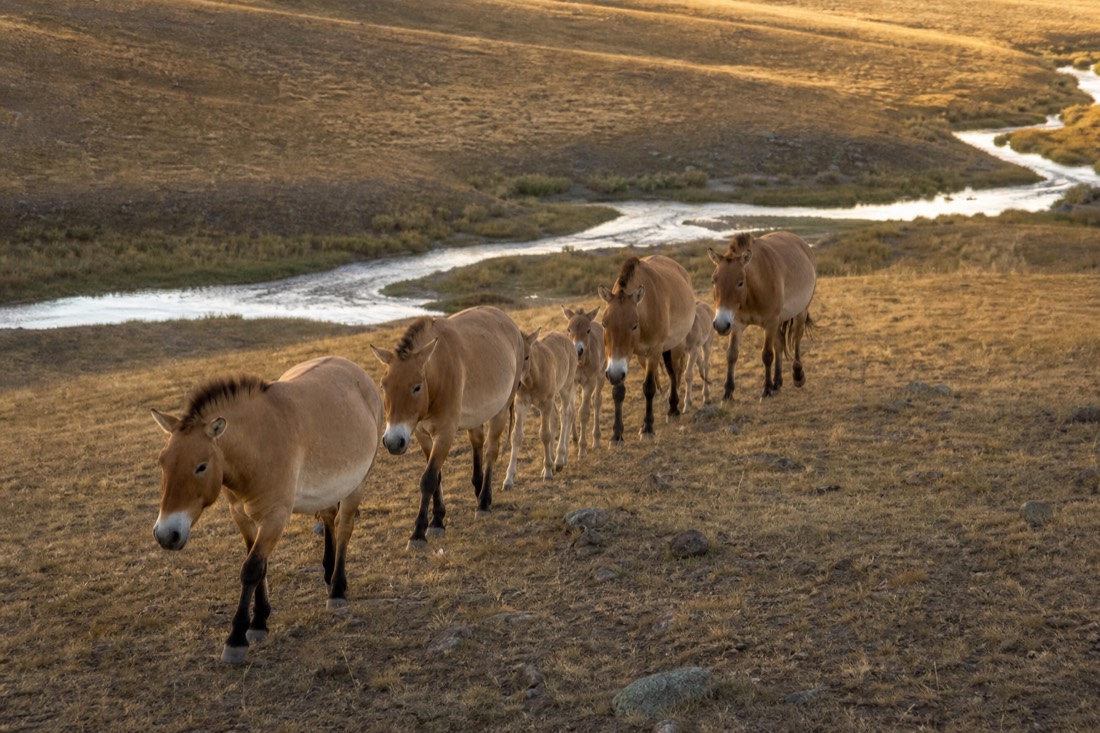
A takhi harem is a small, stable family: one lead stallion, a few mares, and their foals, with young bachelor males hanging off in loose separate bands. Coming to water they move in a line, foals sheltered in the middle, the stallion often last and watchful. The park counts roughly 380 takhi across about 34 harems.
Once you know the shape, a distant smudge on the grass resolves into a story. The stallion is the one that keeps lifting his head, placing himself between the family and whatever he does not trust, which on a given morning might be you. Mares lead the group to water as often as not. Foals, if it is late spring or summer, stay tucked close and clumsy-legged. Off to the side you will sometimes spot a knot of two or three young males with no mares of their own, the bachelor band, biding their time.
| Part of the harem | What you are looking at | What it tells you |
|---|---|---|
| Lead stallion | One adult male, usually rearmost and alert | The family's early-warning system; sets the mood |
| Mares | Several adult females, often leading to water | The stable core of the harem, year to year |
| Foals | Young, close to the mares, spring and summer | A sign of a breeding harem doing well |
| Bachelor band | Two or more young males, apart from the family | Future stallions, not yet holding a harem |
The dun coat, dark upright mane and dark dorsal stripe make them unmistakable once they are in decent light, and they look nothing like the domestic Mongolian horses you will pass on the drive out. These are genuinely wild animals, the only horse lineage never brought under the saddle, as the record on Przewalski's horse sets out. That difference in the animal itself is worth reading up on before you go; the wild horses of Mongolia guide lays out what actually makes the takhi a genuinely wild species rather than a feral one.
What should you bring for a dawn start at Hustai?
Dress far warmer than the forecast suggests, because a steppe dawn runs cold even in summer, and pack for standing still rather than walking. Layers, a wind shell, binoculars, a long lens if you have one, and patience. You will spend more time waiting quietly than moving, so comfort at rest matters most.
The single biggest first-timer mistake is under-dressing for the wait. You are not hiking hard, you are standing motionless on an exposed ridge before the sun clears the hills, and the cold finds you. The second mistake is leaving the binoculars in the vehicle because "we'll get close." You often will not, and a decent pair of binoculars turns a distant grey smudge into a stallion guarding his mares.
| For a dawn start, bring | Why it earns its place |
|---|---|
| Warm layers and a windproof shell | A steppe dawn is cold even in July; you will be standing, not walking |
| Binoculars (8x or 10x) | The good sightings sit at 200 metres or more; optics are not optional |
| A long camera lens | Anything under 200mm leaves the horses as specks |
| Water and a small snack | An early departure skips a proper breakfast |
| Quiet, muted clothing | Bright colours and loud voices push the band away |
None of this is about roughing it. It is about being set up to stay still and comfortable in the one hour that does the heavy lifting. If you want the full packing rundown for a day in the park, I keep it current in the what to pack for Hustai guide, and the photography-specific side, distance, light and lens choice, lives in the piece on photographing takhi from a distance.
Common questions about dawn viewing at Hustai
Is it really worth getting up before dawn? For the horses, yes. The difference between a 6 AM ridge and a 10 AM one is the difference between a family at the water and a few dots on a far slope.
Can I do this on a normal group day trip? Partly. Group departures usually reach the park after the prime window. If dawn is the goal, ask whether an early departure can be confirmed for your date, but do not treat a private booking as a dawn guarantee.
Will I definitely see takhi? Very often, but no honest guide promises it. Wild animals in 50,000 hectares keep their own schedule. Dawn simply stacks the odds in your favour.
How long do we wait in one spot? Anywhere from ten minutes to an hour. Patience is the tool that matters most out there.
The horses drank for maybe fifteen minutes that morning, then turned as one and started the slow climb back toward the ridges. Nobody spoke for a while after they went. That is the sound Hustai leaves you with, not hooves, just a quiet valley and the sense that you were let in on something the land does every day whether anyone shows up or not.
Choose Your Next Step
Private Hustai Wildlife Day
Have your travel date in mind? Check Private Hustai Wildlife Day before arranging the rest of your trip.
8 to 10 hours. Private transport, lunch and park admission; pickup offered from Ulaanbaatar. English, French, Korean or Russian. Wildlife and a dawn departure are not guaranteed. Not wheelchair accessible; not recommended during pregnancy.
Compare Trip Styles And Adjust Your Choice
- Six-Hour Hustai Day: About 6 hours. Downtown Ulaanbaatar hotel transfers, local lunch, entrance and an English- or Mongolian-speaking guide. Not suitable for mobility impairments. Sightings are not guaranteed. Arrange your own travel insurance.
- Two-Day Hustai And Nomadic Homestay: Two days with a private ger at a nomadic family, meals and Ulaanbaatar hotel pickup. English guiding. This is not either named Hustai tourist camp. Riding and the cultural show cost extra. Not wheelchair accessible.
This is trip guidance, not an eligibility or availability confirmation. Check the operator's restrictions for everyone travelling.
Choose a date to inspect the Viator departure schedule. Final availability and price are confirmed on Viator.