Photographing Takhi From a Distance: A Guide's Field Notes
How to photograph Hustai's wild takhi under the park's 200 to 300 metre distance rule, with lens and settings guidance, the best light by season, and the ethics that keep the horses wild.
 By Bat-Erdene Ganbaatar, Hustai National Park tour guide and wildlife specialist
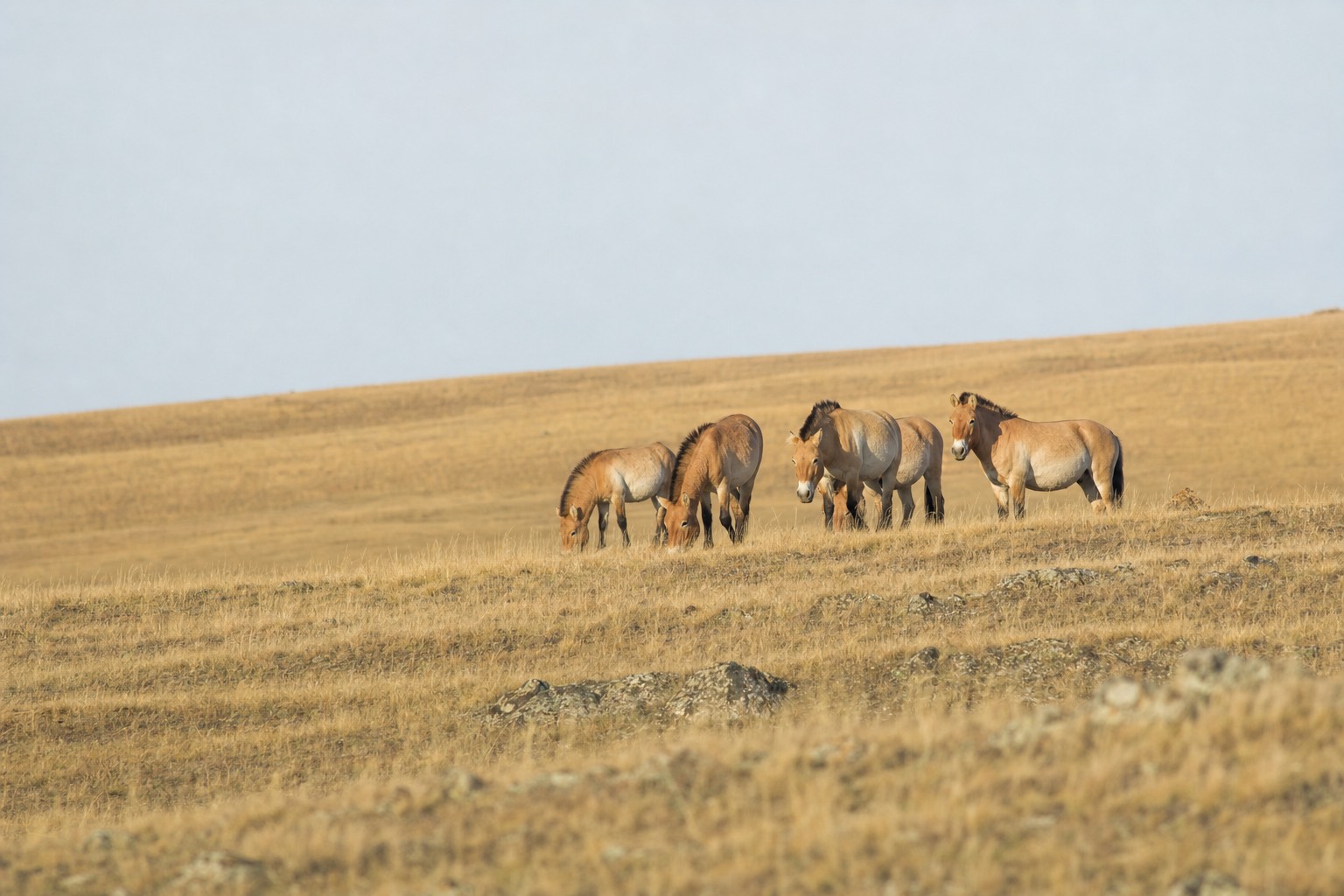
The light that matters lasts about forty minutes. It arrives low and gold across the ridge just after sunrise, rakes the grass until every stalk throws a shadow, and then it is gone, flattened into ordinary daylight. If you want a photograph of the takhi that looks like the animal actually is, wild and remote and ancient, that is the window you build the whole morning around.
Discover how Hustai's distant wildlife looks in its natural steppe setting on a private 8 to 10-hour visit with transport, admission and lunch arranged. Bring your own camera, long lens and support. Explore the private Hustai wildlife visit
Booking Choice: For photographers bringing their own equipment, the private Hustai wildlife visit combines a longer day in the park with pickup, private transport, admission and lunch. Wildlife sightings and dawn timing are not guaranteed. See the private Hustai visit
I have watched a lot of visitors miss it. They arrive at ten, point a phone at a smudge on a far slope, and wonder why the pictures look like nothing. The takhi are not a smudge problem, they are a distance problem, and once you plan for the distance the pictures get good.
How close can you get to the takhi to photograph them?
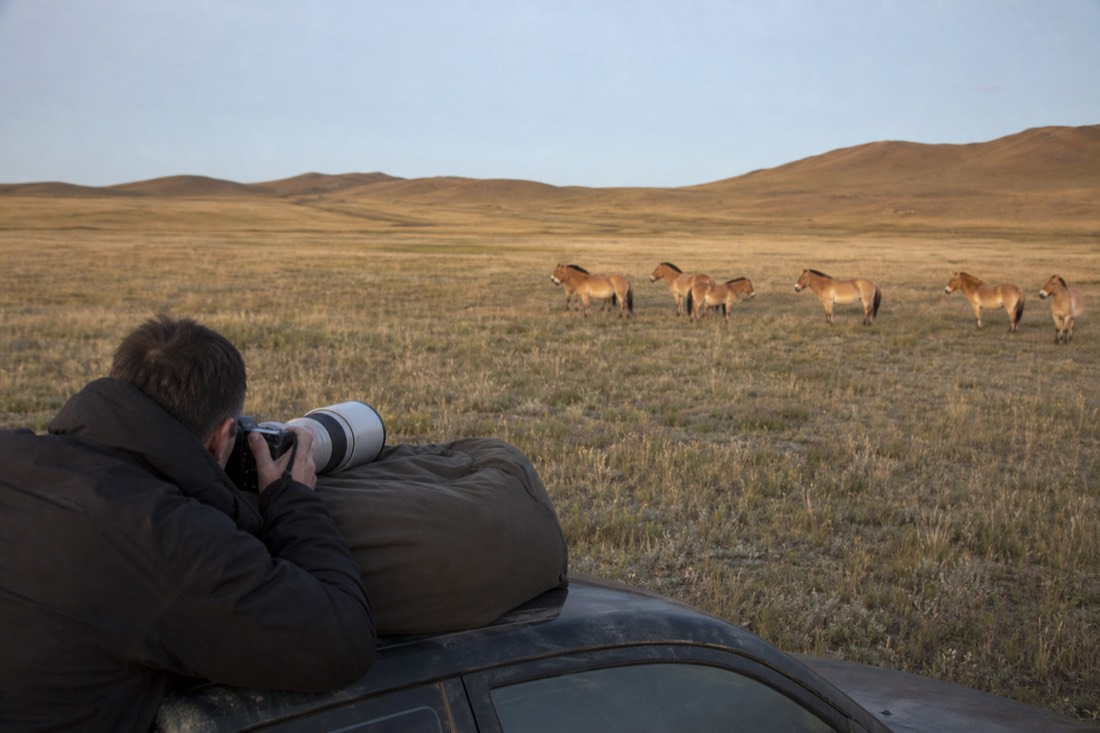
Not close. The park requires you to keep 200 to 300 metres from the takhi, with no feeding and no leaving the tracks. That rule is not negotiable, and it shapes every photographic decision you make. You are shooting wild animals at range, which means long glass, steady support and patience do the work your feet are not allowed to do.
This is the single fact that separates good takhi photography from frustration. You cannot walk up to a harem. A park guide accompanies wildlife drives inside the protected zone precisely to keep that distance honest, and the horses are calmer and more natural because of it. Accept the 200 to 300 metres as a creative constraint rather than an obstacle, and you start making pictures instead of chasing them.
The upside of distance is behaviour. A harem that does not feel crowded goes on grazing, sparring and moving as it would with no humans present, which is the behaviour worth photographing. If you want the background on why these horses are so protected, our Przewalski horse guide covers the biology and the comeback.
What lens and camera settings actually work here?
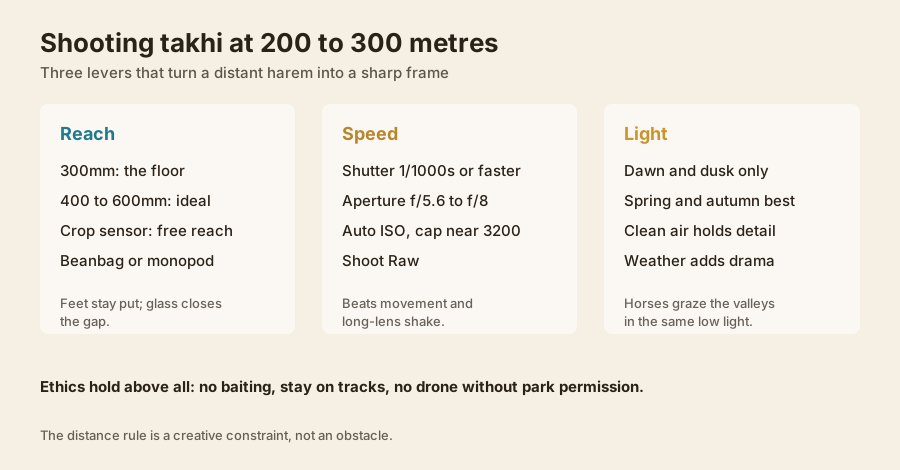
You want reach and light-gathering. A 300mm lens is the practical floor, 400mm to 600mm is better, and on a crop sensor you gain extra reach for free. Shoot at dawn or dusk, use a fast enough shutter to beat both horse movement and long-lens shake, and lean on a beanbag or monopod. Raw files give you room to recover the low-light shadows.
Here is the quick grid I would hand a photographer before they set off. These are starting points, not laws, and you adjust to the light in front of you.
| Setting | Starting point | Why |
|---|---|---|
| Focal length | 300mm minimum, 400 to 600mm ideal | The 200 to 300 m distance rule leaves horses small in frame |
| Shutter speed | 1/1000s or faster | Beats grazing movement and long-lens shake at range |
| Aperture | f/5.6 to f/8 | Sharp across the harem while holding some light |
| ISO | Auto, capped around 3200 | Dawn and dusk are dim; accept grain over blur |
| File format | Raw | Recovers shadow and highlight from low, contrasty light |
| Support | Beanbag on the vehicle, or monopod | Handholding 500mm across a valley rarely stays sharp |
A crop-sensor body is quietly the budget photographer's friend here, since it multiplies your effective reach without a heavier lens. If all you have is a phone, a clip-on telephoto and a steady rest will still beat a bare handheld shot, but manage your expectations: the takhi will read as distinct animals on a hillside, not portraits.
When is the best light for takhi photographs?
Dawn and dusk, always. The takhi come down to the valleys to graze in the low light at the start and end of the day, which is exactly when the sun sculpts the steppe instead of flattening it. Spring and autumn give the cleanest air and the most active herds. Midday, both for light and for horses that have moved to cover, is the weakest window.
The horses and the light cooperate, which is the lucky thing about Hustai. Both peak at the same edges of the day. Plan your visit around them and half the work is done. Here is how the light windows shift across the year.
| Season | Best light window | Conditions to expect |
|---|---|---|
| Spring (Apr to May) | Early dawn, soft and clear | Foals appear, herds active, green returning to the grass |
| Summer (Jun to Aug) | Very early dawn, brief | Long days, harsh midday, heat haze at distance later on |
| Autumn (Sep to Oct) | Dawn and a strong golden dusk | Crisp air, warm grass tones, some of the year's best colour |
| Winter (Nov to Mar) | Low all-day sun, long shadows | Severe cold, empty park, takhi against snow if you brave it |
Autumn is my quiet favourite for a camera. The air is clean enough that a 500mm shot across a valley holds detail, the grass turns the colour of the horses, and dusk lingers. If you are timing a trip purely for photography, our best time to visit Hustai guide lines the seasons up against weather and crowds.
What are the ethics of photographing wild takhi?
Photograph honestly and hide nothing. Keep the 200 to 300 metre distance, never bait or feed the horses to draw them in, stay on the tracks, and do not fly a drone without permission from park headquarters. The rules exist because these animals were pulled back from extinction in the wild, and a photograph is never worth disturbing a harem.
This is the part I care about most. The takhi were declared extinct in the wild in 1969 and only exist here because of a reintroduction that began in 1992. Every one of them matters to the population, so the ethics are not a formality. Do not use food to pull a horse closer for a better shot. Do not step off the track to close the gap. Both stress the animals and both break the park's rules.
Drones deserve a specific warning. They can panic a harem badly, and you should never assume they are allowed. If you are considering aerial footage, ask at park headquarters first and abide by whatever they say, because rules on unmanned aircraft over a protected reintroduction site are strict and change. The honest answer for most visitors is simple: leave the drone in the bag.
Here are the ethics laid out as plainly as I can, the same rules I hold every guest to.
| Rule | In practice |
|---|---|
| Keep 200 to 300 m distance | Let the lens close the gap, never your feet |
| No baiting or feeding | Do not use food or salt to draw a horse nearer |
| Stay on tracks | Trampling the grazing zone stresses the whole harem |
| No drones without permission | Ask at headquarters first; assume no by default |
| No flash | It startles animals and never carries the distance anyway |
| Follow your guide | They read the harem's mood and keep the encounter calm |
Composition on open steppe rewards restraint. Place a single harem small against a sweep of hill and sky and you tell the truth about the animal: tiny, free, exactly where it belongs. Weather is your friend here. A brooding sky, a shaft of light breaking through, mist in a valley bottom, these turn a distant-horse record shot into a photograph with weather drama and scale.
Because photography needs unhurried time, a group schedule can fight you.
Can I photograph the other wildlife too?
Yes, and you should. While the takhi are the headline, the same lens and light serve red deer at the wooded valley edges, birds of prey riding the thermals, marmots at close roadside range, and gazelle on the plains. The deer and raptors especially reward the patient photographer who stays out through dusk.
Do not pack up the moment you have your horse frames. The park's red deer herd has grown past 1,300 animals, and stags at the tree line in autumn light are a serious subject in their own right. Marmots, unlike everything else, come to you, sitting up at burrow mouths within easy range for a sharp, characterful close-up. If you want to know the full cast before you go, the animals of Hustai National Park runs through it, and the IUCN Red List entry for the species is worth reading for the conservation context behind what you are shooting.
Common questions about photographing takhi at Hustai
What is the minimum lens for takhi photos? A 300mm is the practical floor given the 200 to 300 metre distance rule. A 400 to 600mm lens, or a crop-sensor body with a shorter tele, gives far better results.
Can I fly a drone to film the horses? Do not assume you can. Rules over a protected reintroduction site are strict. Ask at park headquarters first and follow their answer, which for most visitors will be no.
Is a phone camera good enough? It will record the horses as distinct shapes on a hillside, not portraits. A clip-on telephoto and a steady rest help, but the distance rule favours a real long lens.
When is the light best? Dawn and dusk, when the takhi graze the open valleys and the low sun sculpts the steppe. Autumn gives the cleanest air and warmest colour.
Can I bait the horses closer for a better shot? No. Feeding or baiting is against park rules and stresses the animals. The distance is fixed at 200 to 300 metres, so let your lens do the reaching.
Shoot the light, respect the distance, leave the harem exactly as you found it. Do that and the picture you carry home is honest: a species back from the edge, grazing free where the grass runs to the horizon.
Choose Your Next Step
Private Hustai Wildlife Day
Have your travel date in mind? Check Private Hustai Wildlife Day before arranging the rest of your trip.
8 to 10 hours. Private transport, lunch and park admission; pickup offered from Ulaanbaatar. English, French, Korean or Russian. Wildlife and a dawn departure are not guaranteed. Not wheelchair accessible; not recommended during pregnancy.
Compare Trip Styles And Adjust Your Choice
- Six-Hour Hustai Day: About 6 hours. Downtown Ulaanbaatar hotel transfers, local lunch, entrance and an English- or Mongolian-speaking guide. Not suitable for mobility impairments. Sightings are not guaranteed. Arrange your own travel insurance.
- Two-Day Hustai And Nomadic Homestay: Two days with a private ger at a nomadic family, meals and Ulaanbaatar hotel pickup. English guiding. This is not either named Hustai tourist camp. Riding and the cultural show cost extra. Not wheelchair accessible.
This is trip guidance, not an eligibility or availability confirmation. Check the operator's restrictions for everyone travelling.
Choose a date to inspect the Viator departure schedule. Final availability and price are confirmed on Viator.