Julia Roberts, Wild Horses, and What Mongolia Actually Delivers
The 2000 documentary 'Wild Horses of Mongolia with Julia Roberts' still sends travellers here. What it really showed, the honest gap between the horses she rode and the wild takhi at Hustai, and what a visit gives you today.
 By Bat-Erdene Ganbaatar, Hustai National Park tour guide and wildlife specialist
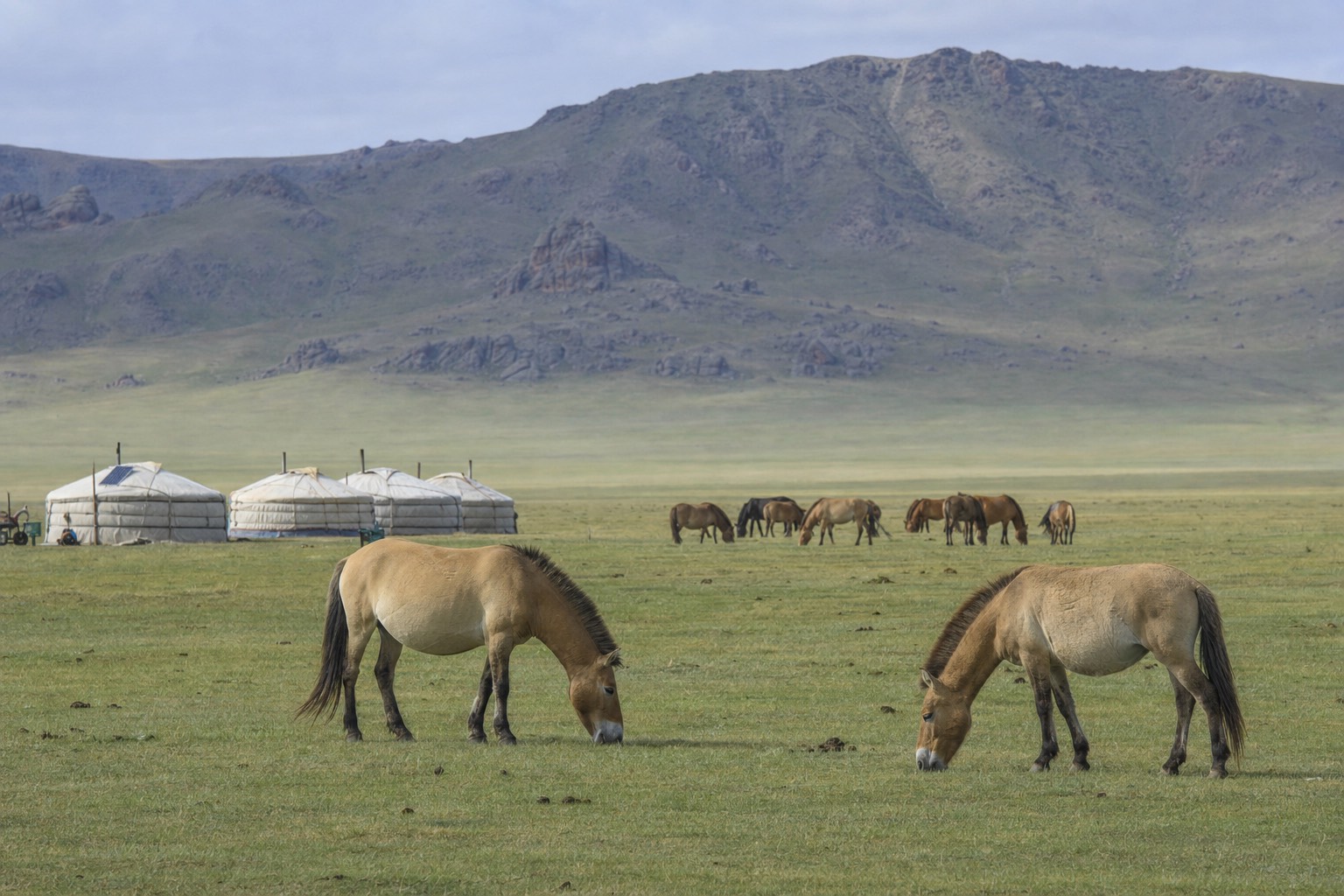
TL;DR: In 2000, Julia Roberts fronted a documentary called "Wild Horses of Mongolia," directed by Nigel Cole, living with a nomadic family and riding their domestic horses. Those are not the wild takhi. The genuinely wild Przewalski's horse lives at places like Hustai and cannot be ridden at all. The film still pulls people to Mongolia, and a day at Hustai is where the real wild-horse story actually pays off.
The documentary showed Mongolia's domestic horse culture. Discover the wild side on a private Hustai day with Ulaanbaatar pickup offered, private transport, admission and lunch arranged. Discover the private Hustai wildlife visit
Booking Choice: For a private day focused on the wild horse story, use the 8 to 10-hour Hustai visit as the starting recommendation. Check your real travel date before arranging the rest of your Ulaanbaatar plans. Check private Hustai availability
Every season, someone in my group mentions the Julia Roberts film. They half-remember it, a famous face on a horse somewhere in this enormous country, and it planted a seed that eventually became a plane ticket. I never roll my eyes at that. A documentary from 2000 is still doing my job for me, sending curious people across the world to the steppe. What I do, gently, on the drive out, is untangle what that film actually showed from what they are about to see.
Because the two are not the same horse, and the difference is the whole point of coming to Hustai.
What was the Julia Roberts wild horses documentary?
It was a 2000 television documentary, "Wild Horses of Mongolia with Julia Roberts," directed by Nigel Cole. Roberts travelled to Mongolia, stayed with a nomadic herding family, learned a little of their life on the steppe, and rode their horses. It is a warm portrait of nomadic culture and the human bond with horses, not a wildlife film about the takhi.
The film belongs to a run of celebrity-fronted nature and travel documentaries from around that time, and it works precisely because Roberts is a guest, not an expert. She turns up, she is out of her depth, she learns to ride the small tough Mongolian horses, and she shares meals in a ger. It is affectionate and human, and it left a lasting picture in a lot of heads of Mongolia as a land of horses and open grass.
The core facts are easy to confirm. The IMDb entry lists the 2000 release and Nigel Cole as director. What the listing cannot tell you is the thing I have to clear up in person almost every trip: the horses on screen are domestic animals belonging to a herding family, the ordinary working horses of Mongolia, and not the wild Przewalski's horse the country is famous for protecting.
| Film fact | Detail |
|---|---|
| Title | Wild Horses of Mongolia with Julia Roberts |
| Year | 2000 |
| Director | Nigel Cole |
| Setting | Life with a nomadic family on the Mongolian steppe |
| Horses shown | Domestic Mongolian horses, ridden and herded |
| Not shown as the subject | The wild takhi (Przewalski's horse) |
Are the horses in the film the same as the wild takhi?
No, and this is the honest heart of it. Roberts rode domestic Mongolian horses, the herding animals nomads breed, ride and race. The takhi is a separate, never-domesticated wild species. It carries 66 chromosomes to the domestic horse's 64, has a stocky build, a dark upright mane and a dorsal stripe, and it cannot be ridden or tamed at all.
This trips up a lot of visitors, so I lay it out plainly. Mongolia has millions of domestic horses, and they are magnificent in their own right: hardy, half-wild in behaviour, central to daily life and to Naadam racing. Those are the horses in the film. The takhi is something else entirely, the only horse lineage that was never brought under the saddle, which is exactly why it matters and why it nearly disappeared.
You can read the genetics and behaviour in more depth in the wild horses of Mongolia guide, but the short version is that "wild" here is literal, not a synonym for "free-roaming." Plenty of domestic horses roam free across the steppe. Only the takhi is genuinely wild, and the Wikipedia entry on Przewalski's horse is a fair starting point on that distinction before you go deeper.
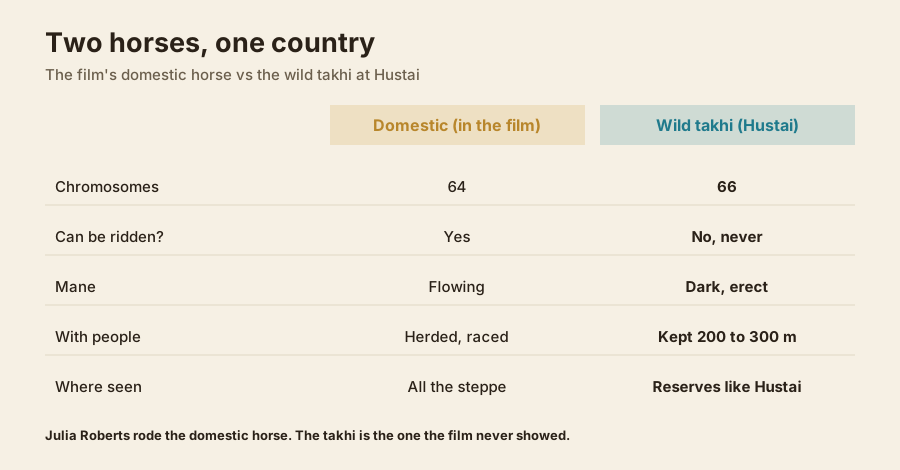
| Trait | Domestic horse (in the film) | Wild takhi (at Hustai) |
|---|---|---|
| Chromosomes | 64 | 66 |
| Can it be ridden? | Yes, it is a working saddle horse | No, never domesticated |
| Build and mane | Slighter, flowing mane | Stockier, dark erect mane, dorsal stripe |
| Relationship to people | Herded, bred, raced | Kept at 200 to 300 m; wild harems |
| Where you see it | Across the whole steppe | Protected reserves like Hustai |
Why does the film still send travellers to Mongolia?
Because it did what good travel films do: it made a distant place feel warm, human and reachable. Two and a half decades on, the image of open grassland, gers and horses still lands people at Ulaanbaatar airport wanting the real thing. Mongolia's visitor numbers hit a record in 2025, and film-planted curiosity is part of that long tail.
Nostalgia is a powerful travel engine. A film you watched years ago sets a mood, and eventually the mood becomes a plan. I meet people who cannot name the director but can still describe the feeling of that documentary, the sense of a slower, wilder life. That feeling is accurate to Mongolia, even if the specific horses were the domestic kind.
And the timing has never been better to act on it. Mongolia recorded roughly 846,000 foreign arrivals in 2025, a record high, helped by visa-free entry for many nationalities that has been extended through the end of 2026. The country the film hinted at is genuinely open and set up for visitors now. If you are weighing whether the trip lives up to the screen memory, the honest appraisal sits in is Hustai worth visiting.
Here is where the two threads meet. The film showed you the culture and the domestic horse. Hustai gives you the chance to look for the wild one the film never featured. I do not operate that departure, so use the listing for exact timings and inclusions.
What does a visit actually deliver today?
A day at Hustai offers the chance to look for the wild horse the film hinted at but never showed, on its own ground. You watch harems drift down to water, you keep a respectful distance, and you stand in a UNESCO biosphere reserve about 100 kilometres from the capital. It is quieter and more real than any documentary frame.
What you will not get is a Hollywood set-piece. There is no wrangling, no riding the takhi, no guaranteed close-up. What you get instead is patience rewarded: a band of genuinely wild horses picking its way across a valley, marmots whistling, a huge sky, and the knowledge that these animals were pulled back from the edge of extinction and put here on purpose.
| What the film suggests | What Hustai actually gives you |
|---|---|
| Riding horses across the steppe | Watching wild takhi you cannot ride or get near |
| A scripted, narrated journey | Unscripted wildlife moving on its own schedule |
| A nomadic family close-up | A protected reserve, rangers, a 200 to 300 m distance |
| Guaranteed horse moments | Patience rewarded; sightings likely but never promised |
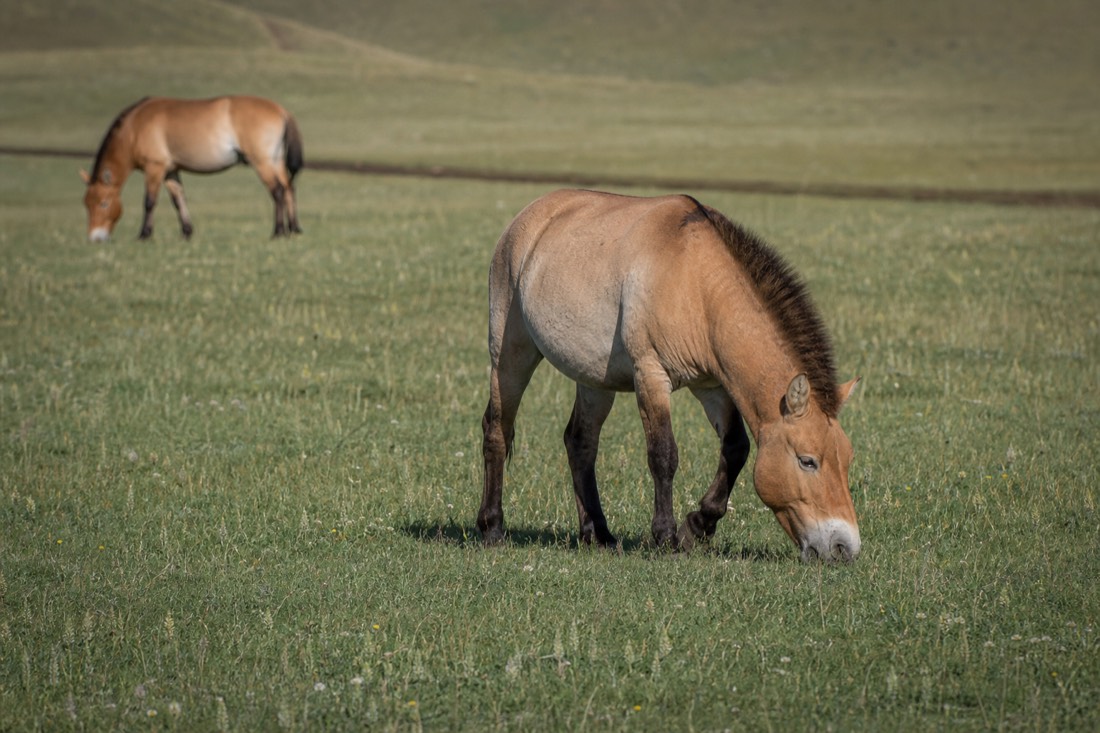
The film and the visit end up complementing each other. Watch it before you come and you arrive with a feel for the nomadic backdrop. Then Hustai supplies the missing chapter, the wild horse itself. The takhi is Mongolia's national animal for a reason, and the fuller story of that status runs through the piece on Mongolia's national animal.
Common questions about the film and a real visit
Did Julia Roberts ride wild takhi in the documentary? No. She rode domestic Mongolian horses belonging to a nomadic family. The wild takhi cannot be ridden.
Where was the film set? On the open steppe with a nomadic herding family, not at a specific wild-horse reserve like Hustai.
Can I ride a wild horse at Hustai? No. The takhi is a protected wild species; visitors stay 200 to 300 metres back and never touch or feed them.
Is it worth coming just because of the film? The film is a fine reason to start. Hustai can make the trip pay off by giving you the chance to look for the wild horse the documentary did not show.
I like that a film from 2000 still does this. Someone watches Julia Roberts fall for a country and its horses, files it away, and years later they are standing beside me on a ridge watching a wild stallion the film never even mentioned. The documentary got them here. The takhi is what they remember.
Choose Your Next Step
Private Hustai Wildlife Day
Have your travel date in mind? Check Private Hustai Wildlife Day before arranging the rest of your trip.
8 to 10 hours. Private transport, lunch and park admission; pickup offered from Ulaanbaatar. English, French, Korean or Russian. Wildlife and a dawn departure are not guaranteed. Not wheelchair accessible; not recommended during pregnancy.
Compare Trip Styles And Adjust Your Choice
- Six-Hour Hustai Day: About 6 hours. Downtown Ulaanbaatar hotel transfers, local lunch, entrance and an English- or Mongolian-speaking guide. Not suitable for mobility impairments. Sightings are not guaranteed. Arrange your own travel insurance.
- Two-Day Hustai And Nomadic Homestay: Two days with a private ger at a nomadic family, meals and Ulaanbaatar hotel pickup. English guiding. This is not either named Hustai tourist camp. Riding and the cultural show cost extra. Not wheelchair accessible.
This is trip guidance, not an eligibility or availability confirmation. Check the operator's restrictions for everyone travelling.
Choose a date to inspect the Viator departure schedule. Final availability and price are confirmed on Viator.