Mongolia's National Animal: Meet the Takhi, the Last Wild Horse
Mongolia's national animal is the takhi, the Przewalski's horse, the only horse never domesticated. What it is, why it matters, and where you can watch it run wild near Ulaanbaatar.
 By Bat-Erdene Ganbaatar, Hustai National Park tour guide and wildlife specialist
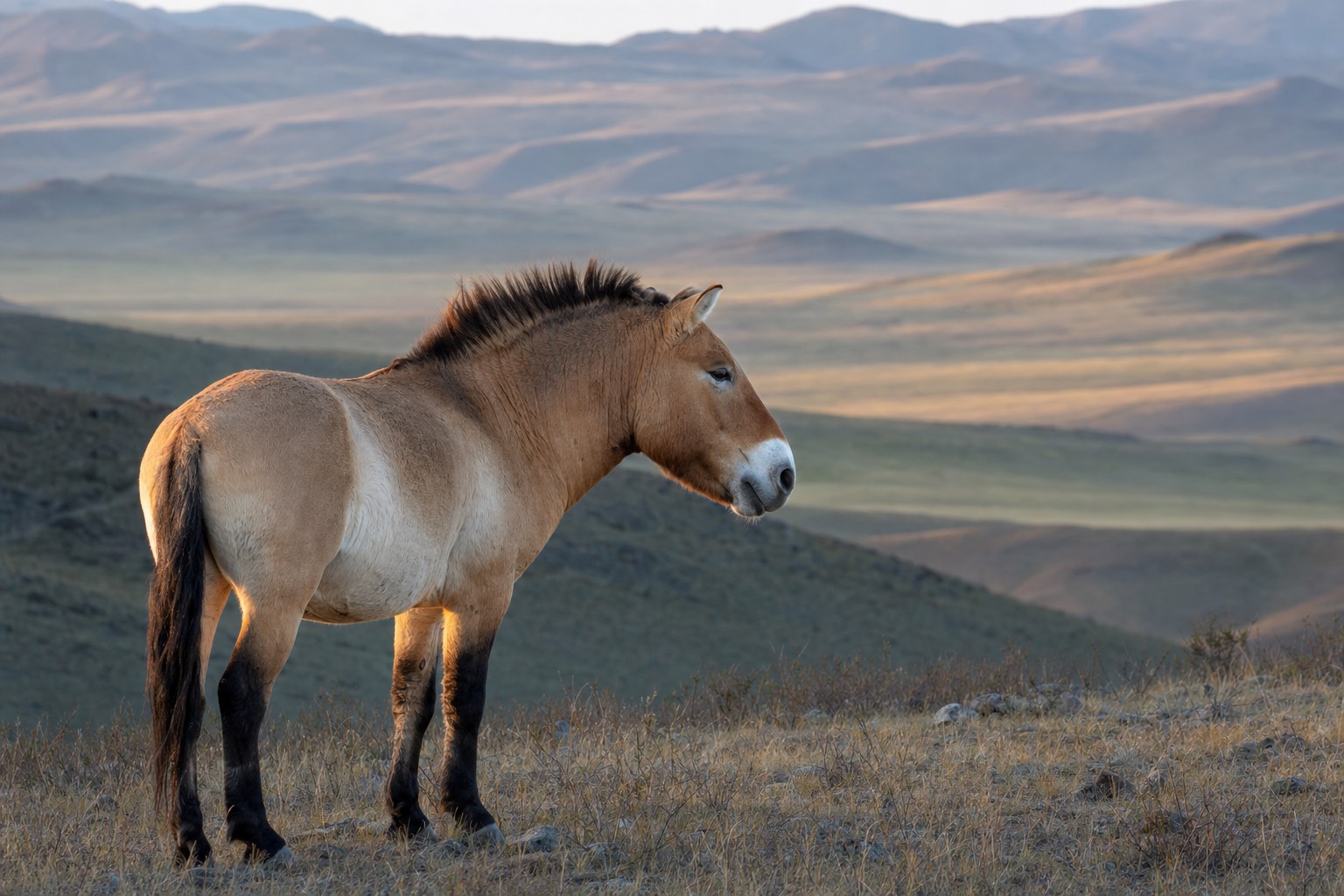
TL;DR: Mongolia's national animal is the takhi, known abroad as Przewalski's horse. It is the only horse on Earth that was never domesticated, it went extinct in the wild by 1969, and it was carried back to the steppe from 1992. Today around 380 range free at Hustai National Park, roughly two hours west of Ulaanbaatar, which is the easiest place in the country to see one.
Discover the takhi's return to the Mongolian steppe on a private Hustai wildlife visit with transport, admission and lunch arranged from Ulaanbaatar. Discover the private Hustai wildlife visit
Booking Choice: Mongolia's national animal is the takhi, the Przewalski's horse. See how its conservation story continues by visiting the free-ranging population at Hustai with the day's main logistics arranged. Explore the Hustai wildlife experience
A guest once asked me, halfway up a Hustai ridge, what animal a Mongolian would name first if you asked what stands for the country. I did not hesitate. The takhi. Then I pointed down the slope, because a small harem happened to be grazing there, tails switching in the wind, and she went quiet. There is a difference between reading that a wild horse is a national symbol and watching one crop grass a few hundred metres below you. I have guided this reserve since 2022, and that gap still gets me every time.
What is Mongolia's national animal?
Mongolia's national animal is the takhi, the Przewalski's horse. It is the only living horse that was never tamed by people, and Mongolians treat it as a symbol of strength, freedom and resilience. Once gone from the wild entirely, it was reintroduced from the 1990s and now runs free again on the steppe it originally came from.
The name matters here. "Takhi" is the Mongolian word, and it means something close to spirit or holy. Abroad the same animal is called Przewalski's horse, after the Russian explorer who first described it for European science in the 1870s. Same horse, two names, and in Mongolia the local one carries real weight.
You can see why it became the emblem rather than the everyday domestic horse. Both are horses, but they are not the same species in the strict sense, and only one of them was ever caught, broken and ridden. The takhi's status as the national animal sits on top of a rescue story that most countries would envy, a wild animal pulled back from the edge and put home. Our full wild horses of Mongolia guide walks through where all the herds live if you want the wider map.
| Mongolia's national animal at a glance | Detail |
|---|---|
| Animal | Takhi (Przewalski's horse) |
| What it symbolises | Strength, freedom, resilience |
| Native range | Mongolian steppe, including Hustai National Park |
| Conservation arc | Extinct in the wild by 1969, reintroduced from 1992 |
| Global standing | The world's last never-domesticated wild horse |
What is the most famous animal in Mongolia?
The takhi is Mongolia's most famous animal by reputation, since it is the national animal and the only truly wild horse left on the planet. Day to day, though, the animal foreign visitors actually see most is the tarbagan marmot, which is everywhere on the steppe. Red deer and Mongolian gazelle round out the wildlife people meet at Hustai.
Fame and frequency are two different things, and I try to set that straight early with every group. The takhi is the headline, the animal on the postcards and the reason most people book a day out to Hustai in the first place. But a slow horse morning is often saved by marmots. They stand sentry at their burrows, whistle a warning as the vehicle rolls past, then vanish underground, and they never fail to make people laugh.
The recovery of the other species is quieter but real. Hustai's red deer herd has climbed from around 50 animals to over 1,300 across roughly 25 years of protection, and the Mongolian gazelle count inside the park has passed 500 from a standing start. The park's own fauna records log 55 mammal species and 223 bird species in all. So the takhi is the famous one, but it shares the grass.
| Famous Mongolian animal | Why it stands out | Where you tend to see it |
|---|---|---|
| Takhi (wild horse) | National animal, world's last wild horse, around 380 to 450 at Hustai | Hustai valleys at dawn and dusk |
| Tarbagan marmot | Abundant, an ecosystem engineer of the steppe | Hustai burrows, often right beside the track |
| Red deer | Herd recovered from about 50 to over 1,300 | Hustai's wooded valleys |
| Mongolian gazelle | Park count now over 500 from none | Open steppe inside the park |
| Grey wolf | Present, preys on takhi foals, rarely seen | Hustai, elusive and shy |
| Domestic Mongolian horse | Nomad herds, ridden and milked, central to daily life | The countryside almost everywhere |
What is the rarest animal in Mongolia?
Among the animals a visitor can realistically hope to see, the takhi is one of the rarest on Earth. Only around 2,000 exist worldwide, and every single one descends from roughly 14 horses caught in the wild last century. Hustai holds one of the largest free-ranging herds anywhere, which is why so few places can show you a genuinely wild one.
That founder number is the part people struggle to absorb. Every takhi alive today, in Mongolia, in China, in Russia and in zoos, traces back to a handful of animals bred through the twentieth century. The Smithsonian's National Zoo puts the founder count at about 14, caught between 1910 and 1960. From that thread grew every herd now standing on the steppe.
Mongolia has other genuinely scarce wildlife, and I am careful not to overpromise it. The famous high-mountain and desert rarities live far from Hustai and far from a day trip out of the capital, so I keep those out of the sightings talk. What I can honestly say is that the horse in front of you at Hustai is, in numeric terms, one of the rarest large animals you will ever get to watch in the wild. The takhi's official standing is logged on the IUCN Red List, which moved it from critically endangered in 2008 to endangered in 2011 as the wild herds took hold. For the full population arithmetic, see how many Przewalski's horses are left.
Where can you see Mongolia's national animal in the wild?
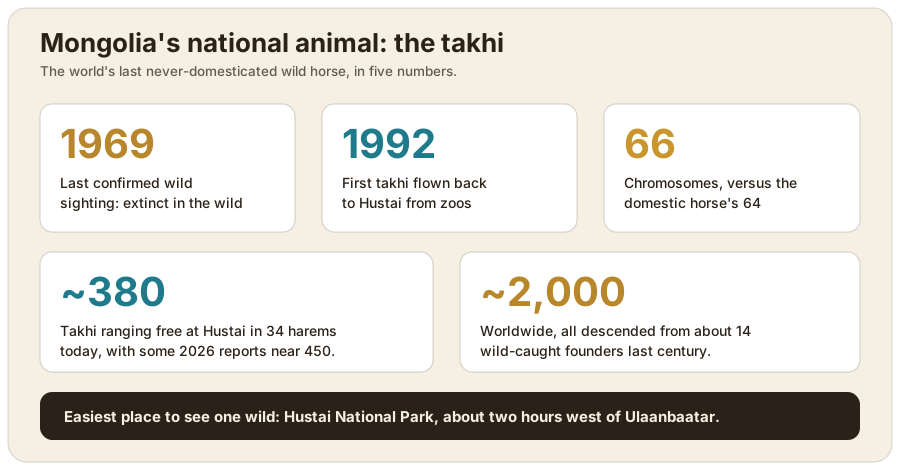
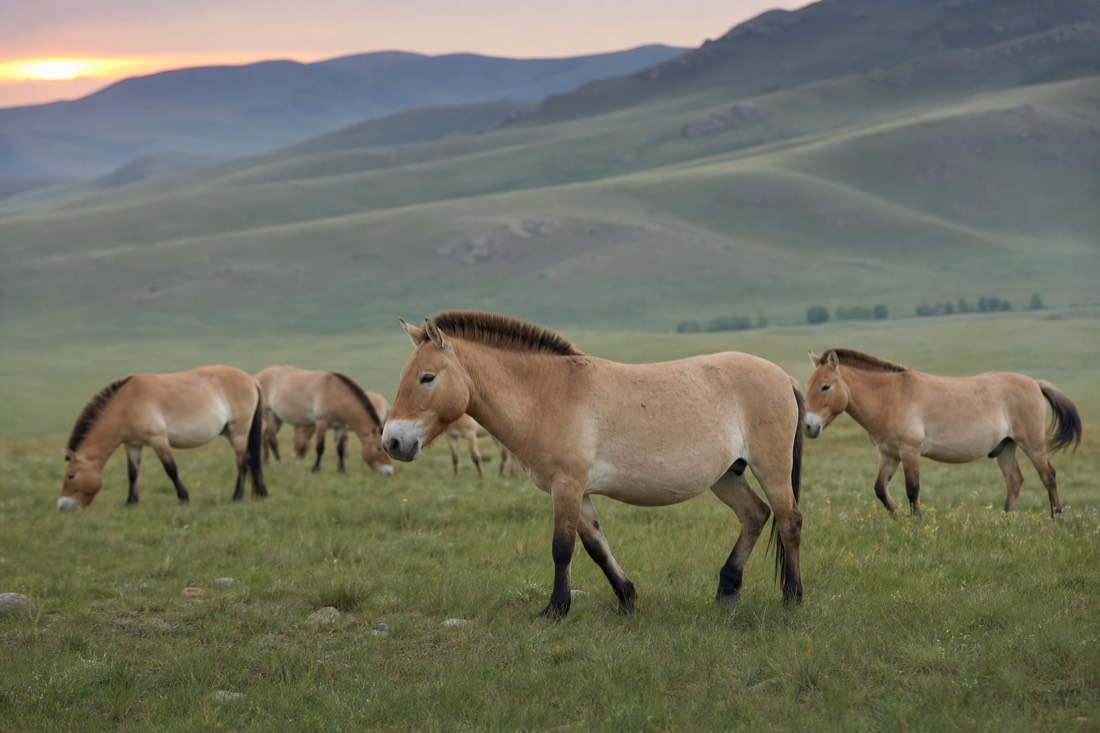
The easiest place is Hustai National Park, about 100 km west of Ulaanbaatar, a 1.5 to 2 hour drive on a paved road with a short gravel approach. Around 380 takhi live there in roughly 34 harems, and they come down into the valleys at dawn and dusk to graze. A group day trip from the city is the simplest way to reach them.
Hustai works for one plain reason, and it is access. Mongolia's other big wild herd lives out in the Great Gobi B reserve near the Chinese border, a multi-day expedition that few travellers can fit in. Hustai sits within a comfortable half-day of the capital, a park guide accompanies every wildlife drive in the protected zone, and the horses may come to lower ground around sunrise and sunset, but wildlife sightings and timing are not guaranteed. I position groups uphill and quiet, at 200 to 300 metres, and let the harem behave as if we are not there.
If you want to see the national animal on the grass rather than in a photo, the practical move is a day trip out of Ulaanbaatar, with departure timing confirmed before booking. Sightings are never guaranteed, and any honest listing says so, but the odds at the right hour are genuinely good.
| Takhi fast facts | Figure |
|---|---|
| Chromosomes | 66 (the domestic horse has 64) |
| Coat | Dun, with a dark erect mane and a dorsal stripe |
| Can it be ridden? | No, it was never tamed |
| Hustai population | Around 380 in 34 harems, with some 2026 reports near 450 |
| Red List status | Endangered, up from critically endangered in 2008 |
| Best viewing | Dawn and dusk, kept 200 to 300 m back, no feeding |
What is Mongolia most famous for?
Mongolia is famous for the open steppe, for Chinggis Khaan and the empire he built, for a living nomadic herding culture, and for what locals call the eternal blue sky. The takhi belongs on that list too. Bringing the country's national animal back from extinction in the wild is one of the achievements Mongolians point to with real pride.
Ask outside the country and the first answer is usually Chinggis Khaan, and fairly so. The 40 metre steel statue of him on horseback east of the capital pulls in day trippers all year, often paired with a run out to Gorkhi-Terelj. Ask inside the country in July and the answer might be Naadam, the national festival of wrestling, archery and horse racing that fills Ulaanbaatar mid-month. The 2026 Naadam ran the eleventh to the thirteenth of July.
The takhi threads through all of it. A country whose history is built on horses lost its only wild one, then decided that was not acceptable and put it back. When I finish the horse talk on the ridge, that is the note I leave groups on. Not a statistic, a symbol, standing on its own four legs on the grass it was pulled off and carried back to.
Common questions about Mongolia's national animal
Is Mongolia's national animal the same as Przewalski's horse? Yes. Takhi is the Mongolian name, Przewalski's horse the international one, for the same wild species.
Can you ride a takhi? No. It was never domesticated and cannot be tamed or ridden. Our guide on whether you can ride a Przewalski's horse explains why.
Is the takhi still endangered? Yes, it is listed as endangered, an improvement from critically endangered in 2008 as the reintroduced herds grew.
How many takhi are there in the world? Roughly 2,000, all descended from around 14 wild-caught founders. Hustai holds several hundred of them.
The first harem I ever showed to visitors is probably long gone now, replaced by its own foals and grand-foals born wild on that same slope. That, more than any figure I can recite, is what the national animal means here. Mongolia did not just get a symbol back. It got a wild horse breeding on its own grass again, and you can drive out from the capital and watch it happen.
Choose Your Next Step
Private Hustai Wildlife Day
Have your travel date in mind? Check Private Hustai Wildlife Day before arranging the rest of your trip.
8 to 10 hours. Private transport, lunch and park admission; pickup offered from Ulaanbaatar. English, French, Korean or Russian. Wildlife and a dawn departure are not guaranteed. Not wheelchair accessible; not recommended during pregnancy.
Compare Trip Styles And Adjust Your Choice
- Six-Hour Hustai Day: About 6 hours. Downtown Ulaanbaatar hotel transfers, local lunch, entrance and an English- or Mongolian-speaking guide. Not suitable for mobility impairments. Sightings are not guaranteed. Arrange your own travel insurance.
- Two-Day Hustai And Nomadic Homestay: Two days with a private ger at a nomadic family, meals and Ulaanbaatar hotel pickup. English guiding. This is not either named Hustai tourist camp. Riding and the cultural show cost extra. Not wheelchair accessible.
This is trip guidance, not an eligibility or availability confirmation. Check the operator's restrictions for everyone travelling.
Choose a date to inspect the Viator departure schedule. Final availability and price are confirmed on Viator.