Winter at Hustai: Guiding an Empty, Frozen Steppe
What a winter visit to Hustai is really like, from severe cold and short days to takhi digging through snow and a park almost entirely to yourself, plus how tours still run and what to wear.
 By Bat-Erdene Ganbaatar, Hustai National Park tour guide and wildlife specialist
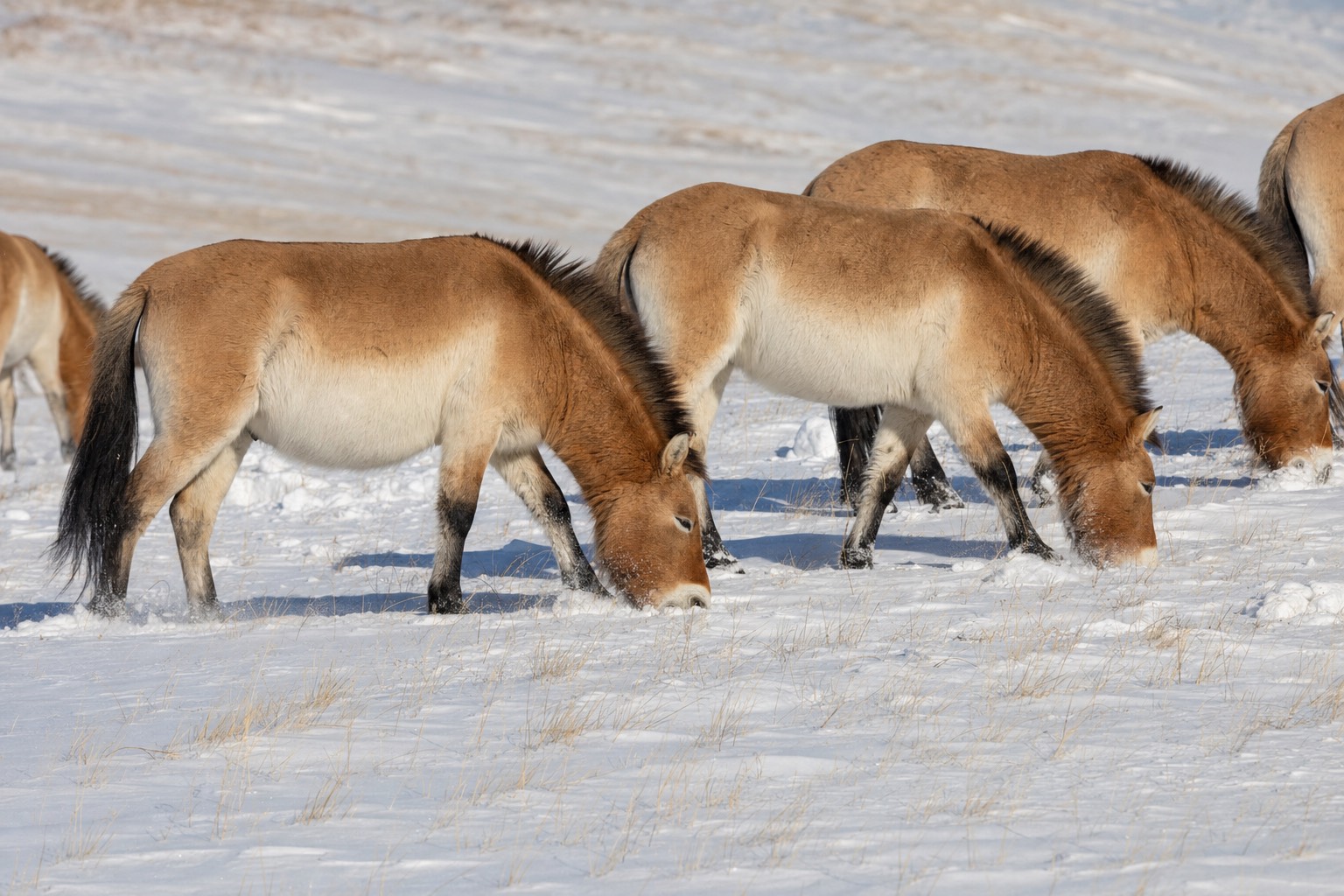
The cold at Hustai in January has a sound. It is the crunch of frozen grass under a horse's hoof, carried across a valley so silent you can hear a harem grazing three hundred metres away. There is no birdsong to speak of, no marmot whistle, no other vehicle. Just wind, snow-light, and the wild horses doing the oldest thing they know, which is surviving a Mongolian winter.
A winter wildlife day needs both suitable clothing and a workable travel plan. Explore the private Hustai outing with transport, lunch and admission arranged. Discover The Private Winter Outing
Booking Choice: The private option offers 8 to 10 hours; the other listed Hustai day takes about six. Confirm your winter date before making separate transport plans. Check Private Hustai Dates
Most visitors never see this version of the park. They come in the green months and leave before the first snow. I understand why, the cold here is not a figure of speech, but the people who do come in winter get something the summer crowds never will: Hustai, empty, with the takhi as the entire show.
Is Hustai open in winter?
Yes. Hustai is presented as open year-round. Confirm winter availability and operating conditions directly with the tour operator, since day-trip listings do not guarantee all-weather operation or a heated vehicle. You lose the marmots and the deep-summer greenery, but you gain solitude, and the takhi are still very much here.
This surprises people. They assume a wildlife park in one of the coldest inhabited regions on earth must shut for winter. It does not. The park stays open, the ger camps keep operating, and the road west from Ulaanbaatar is the same paved highway it is in July. The official park site presents Hustai as a year-round reserve, and in practice the biggest change in winter is not access, it is who else shows up, which is almost nobody.
A listed six-hour Hustai day trip includes downtown hotel transfers, lunch and entry. Confirm winter operation and pickup details for your date because weather can affect both operation and timing. If you have read our best time to visit Hustai guide, you will know spring and autumn are the headline seasons for variety. Winter is the connoisseur's season for atmosphere.
How cold does it actually get?
Genuinely severe. Mongolian winters are among the harshest anywhere, and Hustai sits out on exposed steppe with nothing to break the wind. I will not put a false precise number on it, but treat it as deep, dry, dangerous cold that demands proper layers. Frostbite on exposed skin is a real risk, not a warning to wave away.
I would rather be honest than dramatic. The fact files I trust describe Hustai's winters as severely cold without pinning an exact figure, so I will not invent one. What I can tell you from standing out there is that the cold is the dry, still, biting kind that gets into you quickly when you stop moving, and that the wind on the open steppe is the part that catches people out. It is not the raw number that hurts, it is the wind stripping heat off any skin you leave bare.
That has practical consequences for every part of the day. You will want to be able to warm up between sightings, which is why a heated vehicle is not a luxury here but a piece of safety kit. Time out of the vehicle is short and deliberate: get the view, get the photograph, get back in.
What is winter wildlife viewing like?
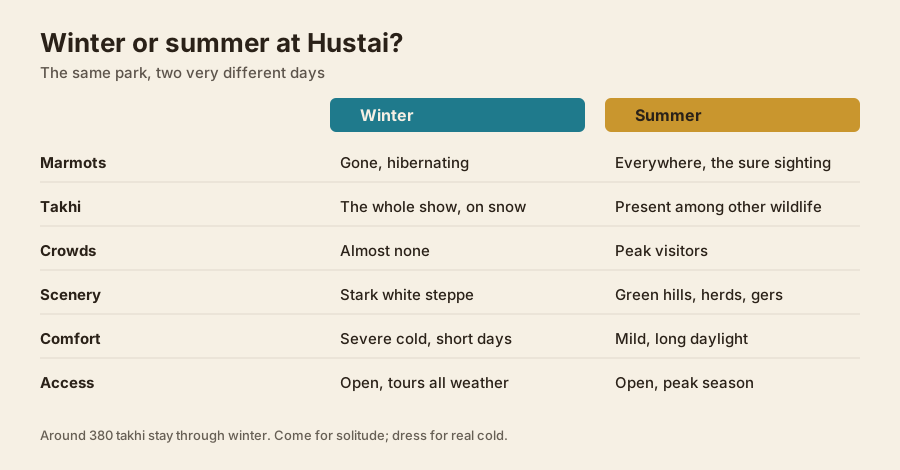
Narrower and, in its own way, more dramatic. The marmots have gone underground to hibernate, so the reliable summer sighting vanishes. That leaves the takhi as the main event, and they are compelling in winter: pawing through snow to reach frozen grass, breath steaming, dark manes against white ground. Red deer and wolves are still about, hungry and more visible against the snow.
The species mix changes the moment the cold sets in. Here is how a winter day compares with a summer one, honestly, so you can decide whether the trade is worth it for you.
| Aspect | Winter at Hustai | Summer at Hustai |
|---|---|---|
| Marmots | Gone, hibernating underground | Everywhere, the sure sighting |
| Takhi | The whole show, digging through snow | Present, sharing the stage with other wildlife |
| Red deer | Visible, hungry, standing out on snow | Present near cover, harder to spot |
| Crowds | Almost none, park to yourself | Peak visitors, especially at weekends |
| Scenery | Stark white steppe, low winter light | Green rolling grassland, herds and gers |
| Comfort | Severe cold, short days | Mild to warm, long daylight |
The takhi themselves are worth the trip in this season. These are the only never-domesticated horses left, brought back from a species that was extinct in the wild by 1969, and watching them dig for grass under snow tells you exactly how they earned their toughness. The Smithsonian notes how hardy the species is, and winter is when you see that hardiness first-hand. Our animals of Hustai National Park guide covers who else you might catch against the snow.
What should I wear for a winter visit?
Dress as if for a polar expedition, not a chilly day. Base layers, a heavy insulated mid-layer, a windproof outer shell, insulated boots rated for deep cold, and full protection for hands, head and face are the minimum. The wind is the enemy, so windproofing matters as much as insulation. Bring more than you think you need.
This is where I get firm with guests, because underdressing here is genuinely risky rather than just uncomfortable. Layering is the whole game: trapped air between layers is what keeps you warm, and a windproof shell is what stops the steppe wind undoing all of it. Here is the kit I want to see before we head out.
| Layer | What to bring | Why it matters |
|---|---|---|
| Base | Thermal top and leggings, merino or synthetic | Wicks sweat, first line against the cold |
| Mid | Heavy fleece or down jacket | The main insulation, trapping warm air |
| Outer | Windproof, waterproof shell | Blocks the steppe wind that strips heat |
| Hands | Insulated gloves, ideally with liners | Fingers go first; liners let you shoot photos briefly |
| Head and face | Warm hat, neck gaiter or balaclava | Protects the skin most exposed to frostbite |
| Feet | Insulated, rated winter boots, thick socks | Standing on frozen ground drains heat fast |
Do not treat any of that as optional. For a fuller checklist across the seasons, our what to pack for Hustai guide breaks it down, but in winter the message is simply more: more layers, more windproofing, more margin.
How do the trips run in winter conditions?
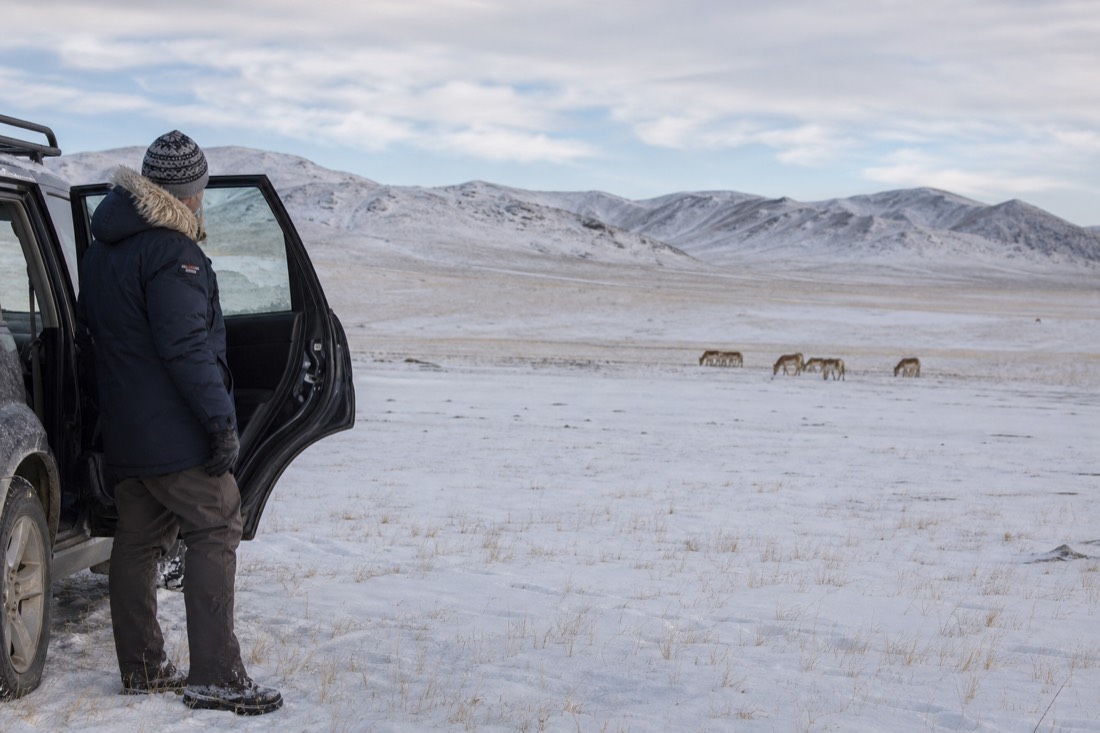
Much as they do in summer, with cold-weather adjustments. Departures still leave Ulaanbaatar, still take the paved highway west, and still put you in front of the takhi, but the rhythm changes: more time in the warm vehicle, shorter stops outside, and a guide watching the weather and the light. A guided day trip can simplify transfers, entry and lunch, but winter operation and the exact trip format should be confirmed.
The mechanics of a winter day are not complicated, they are just colder. You spend more of the drive and the wildlife-watching inside a heated vehicle, stepping out for short, sharp windows when a harem is in view. Days are short in a Mongolian winter, so a guide plans the outing tightly around what light there is rather than lingering. Below is what stays constant and what shifts once the snow arrives.
| Element | Status in winter |
|---|---|
| Park access | Open year-round, no seasonal closure |
| Tour departure | Confirm winter operation and pickup for your date |
| The drive | Same paved highway, short gravel approach, allow 1.5 to 2 hours |
| Marmots | Absent, hibernating |
| Daylight | Short, so the day is planned tightly around the light |
| Time outdoors | Brief and deliberate, warming up between sightings |
Confirm winter operation before booking and prepare suitable clothing for severe cold.
Is a winter trip worth it?
For the right traveler, absolutely. If you want warmth, wildlife variety and easy comfort, come in spring or autumn. If you want the takhi framed against snow, a park with no crowds, and a raw sense of what these horses endure to live wild, winter delivers something the green months cannot. It is a harder day and a rarer one.
I do not send everyone in January. A family with small children, or anyone who dislikes real cold, is better off in the mild seasons, and I will say so. But the traveler chasing atmosphere over comfort gets a genuine reward. Standing on an empty, frozen valley rim while a harem paws through snow below you, with the whole reserve seemingly yours, is the kind of memory the summer coaches never quite reach. For the deeper story of how these horses came back at all, the Przewalski's horse account is a good place to start.
Common questions about visiting Hustai in winter
Is Hustai open in winter? Yes. The park is presented as open year-round. Confirm that a specific tour operates on your winter date because all-weather service is not guaranteed.
Will I still see the takhi in winter? Yes. The horses stay in the park through winter, around 380 of them, and become the main sighting once the marmots hibernate. Watching them dig through snow is a highlight of the season.
How cold does it get? Severely cold, among the harshest winters anywhere, made worse by wind on exposed steppe. I will not quote a false exact figure, but it is deep, dry cold that needs full expedition-grade layers.
Do I need special clothing? Yes. Base layers, heavy insulation, a windproof shell, insulated boots, and full head, face and hand cover are the minimum. Underdressing here is a safety risk, not just discomfort.
Are the roads passable in winter? Road conditions can change in winter. Confirm current access and the operator's plan for your date rather than assuming a tour will run in every condition.
Come dressed for it and winter gives you the version of Hustai almost no visitor sees: quiet, stark, and entirely about the horses that refused to disappear.
Choose Your Next Step
Private Hustai Wildlife Day
Have your travel date in mind? Check Private Hustai Wildlife Day before arranging the rest of your trip.
8 to 10 hours. Private transport, lunch and park admission; pickup offered from Ulaanbaatar. English, French, Korean or Russian. Wildlife and a dawn departure are not guaranteed. Not wheelchair accessible; not recommended during pregnancy.
Compare Trip Styles And Adjust Your Choice
- Six-Hour Hustai Day: About 6 hours. Downtown Ulaanbaatar hotel transfers, local lunch, entrance and an English- or Mongolian-speaking guide. Not suitable for mobility impairments. Sightings are not guaranteed. Arrange your own travel insurance.
This is trip guidance, not an eligibility or availability confirmation. Check the operator's restrictions for everyone travelling.
Choose a date to inspect the Viator departure schedule. Final availability and price are confirmed on Viator.